School offer

The museum « A Possen » offers visit-workshops designed specifically for primary school classes.

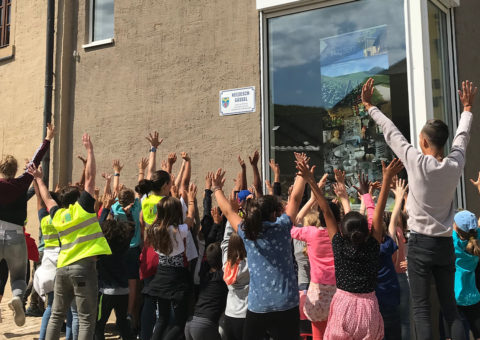
For about one hour, pupils explore a historical theme together with their teacher and a museum guide through a guided tour that is playful and adapted to their age.

This discovery is complemented by a practical workshop lasting about one hour, allowing them to handle materials, experiment, and immerse themselves in traditional techniques and ways of life from the past.

Two options are available:

• Discovery of everyday life: Children explore everyday life in the Luxembourg Moselle region in the 19th and early 20th centuries through a thematic guided tour, followed by a workshop related to the explored theme.

• General museum visit with a creative workshop: Children discover the museum through a general tour of the collections, combined with a creative workshop where they can try activities such as geometry, embroidery, sewing, or knitting. They leave with their own creation.

A preparatory booklet is available for teachers as a pedagogical resource if they wish to explore the themes of the visit with their class before coming to the museum. A thematic activity booklet for the pupils will complement the resource.

In this way, the « A Possen » museum allows pupils to learn while having fun, develop their curiosity, observation skills, and creativity, while discovering the history and traditional know-how of the past.

B Musee enfants R

Two Options

1. Everyday life in the 19th and early 20th century
A thematic tour to discover everyday life in the Luxembourg Moselle region in the 19th and early 20th century. The visit is complemented by a suitable workshop that further explores the chosen theme.


2. History and creativity
A general tour of the museum, followed by a creative workshop.

Option 1

Everyday life in the 19th and early 20th century

As part of these thematic visit-workshops, children, accompanied by their teachers, discover the history of the Moselle region in the 19th and early 20th century. During a guided tour, they explore topics such as food, clothing, traditional skills and crafts, or school life.


In the second part, a workshop led by a museum educator allows the children to apply in practice the traditional knowledge they discovered during the visit.

4 thematic areas

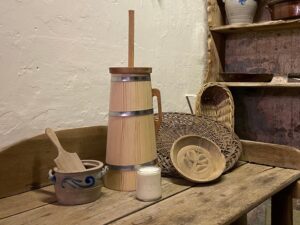
In this visit-workshop, pupils discover what rural families in the Luxembourg Moselle region ate in the 19th and early 20th century, and how they prepared and cooked their food, with a special focus on dairy production and butter making. Using butter as an example, they explore a part of rural Moselle history.

Accompanied by a guide, they first explore the museum collections in an age-appropriate way. The focus is on discovering the foods consumed at the time, particularly the processing of milk and its transformation. The secrets of churning butter, making cheese, and consuming dairy products in the past will no longer be a mystery for the young visitors!

After the tour, the pupils participate in a fun, hands-on workshop led by a museum educator. They learn traditional butter making using a churn. A mold is also available to give the butter an original shape, which they can take home (a small cooler is required to store it).

This practical and enjoyable activity allows children to experiment with ancient techniques, understand the transformation of raw materials, and gain a deeper appreciation of everyday life in the past.

Note: Workshop unavailable from June to September.


*For reasons of hygiene and food safety, the products originally made during a workshop may be replaced with equivalent products from retail.

In this visit-workshop, pupils discover how different crafts transform plants into various objects. Two examples are highlighted: weaving, using flax and hemp, and basketry, using cereal straw or willow.

Accompanied by a guide, children explore the museum collections in an age-appropriate way. A breaker, a winder, a splitter – words rarely heard today, and tools whose use has sometimes been forgotten. The focus is on discovering how plants were transformed into objects with these tools and the associated traditional skills, integrated into rural life in the Luxembourg Moselle region in the 19th century.

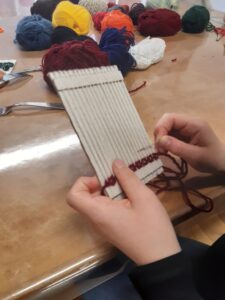
In the second part of this visit-workshop, pupils spend about an hour practicing the historical craft of weaving. Equipped with a small loom and guided by a museum educator, they can freely express their creativity.

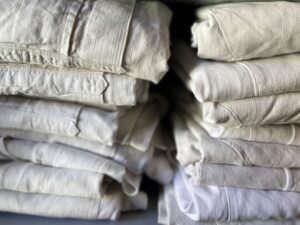
In the first part of this visit-workshop, pupils, accompanied by a guide, discover the museum and its collections, with a focus on the history and evolution of fabrics and clothing in the 19th and early 20th century. Everyday clothes, natural fabrics, and the history of craftsmanship are part of the program.

In the tailor’s and shoemaker’s workshops, pupils have the chance to examine the practices and tools of these trades more closely and learn more about them.

To fully immerse themselves in the clothing of the period, young visitors can try on historical garments and have their photos taken in the museum’s historic spaces. In the second part of the visit-workshop, pupils create a frame from wool and wood to display these photos. During the workshop, they are guided by a museum educator and collect many precious memories, leaving with new knowledge of history.

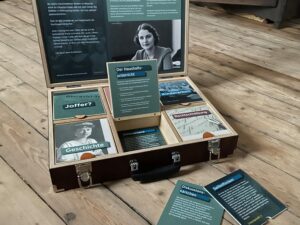
With the educational suitcase, pupils are invited to travel back in time and discover the daily life of a schoolteacher around 1925. The course, designed as a game with puzzles, follows the story of Marguerite Schmit, a fictional character inspired by historical research, helping to understand the reality of school and society at that time.

This playful and educational journey has several objectives:

  • Provide insight into the professional life of a teacher at the beginning of the 20th century;

  • Show how schools and the role of women have evolved over time;

  • Encourage critical reflection on the place and image of women in society.

Pupils accompany Marguerite in her profession by completing various challenges. Each compartment of the suitcase addresses a specific theme and contains puzzles related to museum objects. These objects encourage observation, discussion, and reflection. Each correct answer allows progress in the game by collecting a number to form a secret code. At the end, this code opens a treasure chest – the final reward for collective effort.

The visit is complemented by a hands-on workshop on Sütterlin, the old German handwriting. Using pen and ink, pupils practice this demanding script, which develops fine motor skills, patience, and attention to detail. As a keepsake, each pupil creates a personalized greeting card in Sütterlin – a unique object to keep or give away.

Through this original approach, pupils discover the school of the past while connecting it to their own daily lives. The educational suitcase and workshop provide a unique learning experience combining history, play, reflection, and creativity.
Option 2

History and creativity


As part of these visit-workshops, pupils explore the history of rural life in the Luxembourg Moselle region in the 19th and early 20th century. Accompanied by a guide, they first explore the museum collections. This visit is then complemented by a creative workshop led by a museum educator. Creativity, little historical secrets, fascinating stories, and many discoveries are at the heart of this experience!

4 workshops

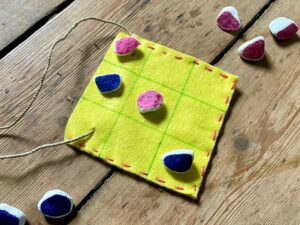
After an approximately one-hour museum visit, pupils create a traditional game: Tic-Tac-Toe. In this workshop, led by a museum educator, they sew, draw, and play. They experiment with different materials such as fabrics, stones, and paints, letting their creativity run free!


Once their own game is fully sewn, decorated, and painted, pupils receive tips to become true Tic-Tac-Toe champions. But beware: even if you don’t win, no one leaves this workshop empty-handed, as everyone takes home their personal creation! A fun workshop to explore geometry in a playful way while encouraging creativity.

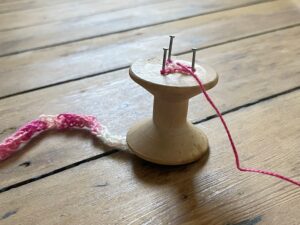
After an approximately one-hour museum visit, pupils explore traditional knitting crafts in the second part of this visit-workshop.


Using a knitting spool and yarn, pupils create a small keepsake in the form of a bracelet under the guidance of a museum educator. This fun workshop offers a great introduction to the traditional craft of knitting!

After an approximately one-hour guided museum tour, pupils explore a traditional craft in this visit-workshop: sewing.


In this sewing workshop, pupils prepare a pattern, explore different textures, and work with shapes while developing their fine motor skills. Guided by a museum educator, they create a small bag or a teddy bear (depending on the teacher’s prior instructions) and take it home as a keepsake of this creative experience.

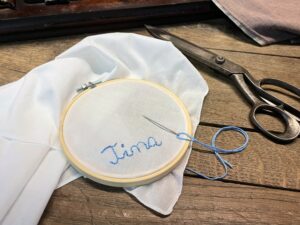
After an approximately one-hour museum visit, pupils explore the traditional craft of embroidery in the second part of this visit-workshop.


In this embroidery workshop, pupils learn to work with needle and thread, explore colors, and develop precision and fine motor skills. Guided by a museum educator, they create a personalized bandana by embroidering their initials or a decorative motif, which they can then take home.

Practical Information

Guided tour: approx. 1 hour


Workshop: approx. 1 hour


Audience: Children aged 6 to 12 years


Languages:

  • Guided tour: Luxembourgish, German, French, English

  • Workshop: Luxembourgish, German, English

Accessibility: Partially accessible for people with reduced mobility (please contact us in advance).


Groups for the guided tour are limited to 15 people per guide. For larger groups, the groups must be divided and multiple guided tours booked.

For more information about the school program at the “A Possen” Museum, to request a quote, make a reservation, or for any other questions, please contact us by e-mail at [email protected], by phone at +352 23 69 73 53, or via the booking form on our website www.musee-possen.lu.


The « A Possen » Museum and its team look forward to your visit!

The Wäistuff Possenhaus

Why not complete your visit with a delicious Moselle meal? The « A Possen » Museum offers a full experience through its neighboring restaurant, the “Wäistuff Possenhaus”. After exploring the exhibitions and participating in the workshops, children can extend their visit with a friendly meal suited to their tastes.


If you would like more information about the menus and pricing, or wish to organize a meal at the “Wäistuff Possenhaus” before, during, or after your museum visit, please specify this in your request.


An allergen list will be included with the quote to ensure food safety for all.

Book your school program