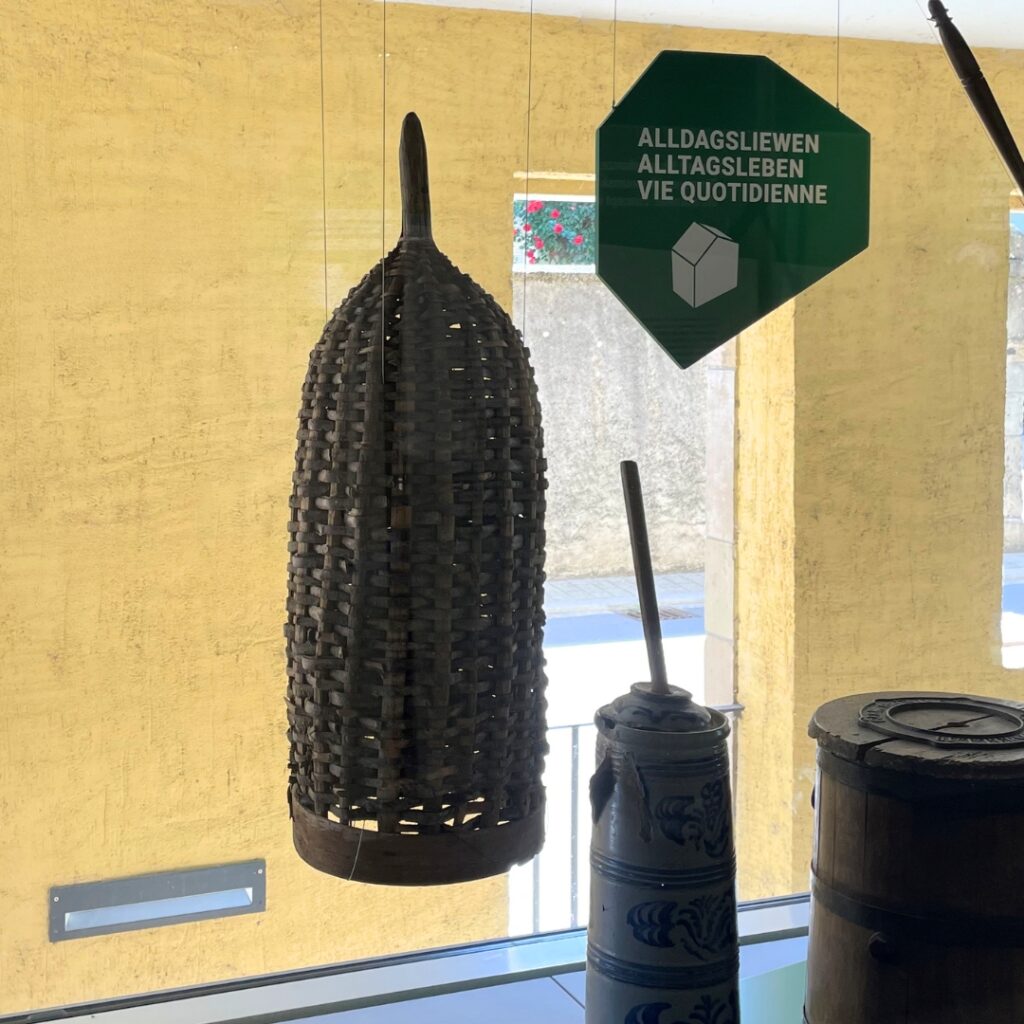
Beekeeping techniques and hive designs have evolved over time, shaping the relationship between humans and bees. Among these hives were the woven beehives, also used in the Luxembourg Moselle. These hives rested on a stand to allow bees to enter. Traces of a mixture of manure and soil can still be seen, ensuring the hive was watertight.
This technique had several drawbacks, the most significant being that harvesting honey and wax often destroyed the colony, as beekeepers would frequently suffocate the bees with sulfur. This method was increasingly criticized in the second half of the 19th century. Woven hives were gradually replaced by hives with movable frames, allowing beekeepers to harvest honey without killing the bees, making beekeeping more sustainable and environmentally friendly.
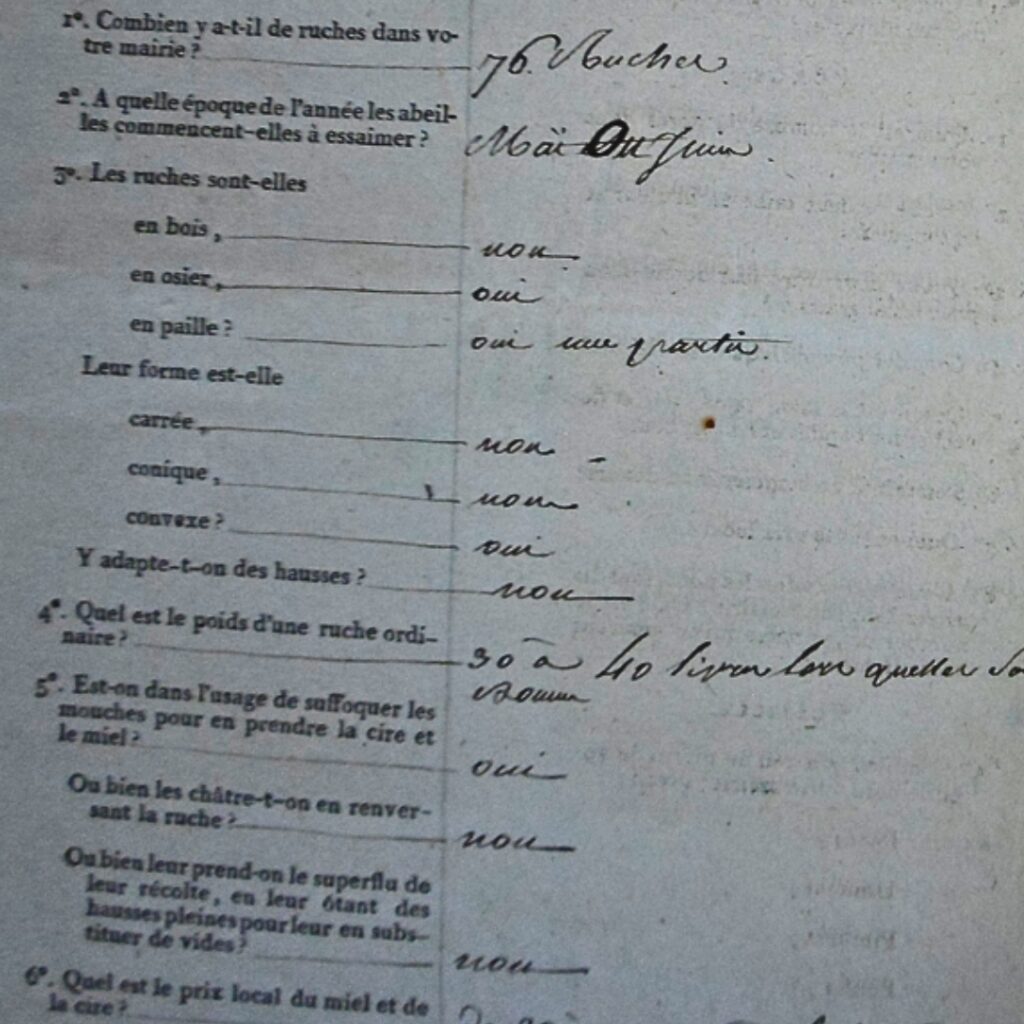
In this excerpt from a document preserved at the National Archives of Luxembourg, 76 hives were recorded in the villages of Schengen, Remerschen, and Wintrange during a survey conducted in 1812.
Source: ANLux, B-0003, Excerpt from a survey for the preparation of a statistical report of the Forestry Department, 4 July 1812.