The Bread oven
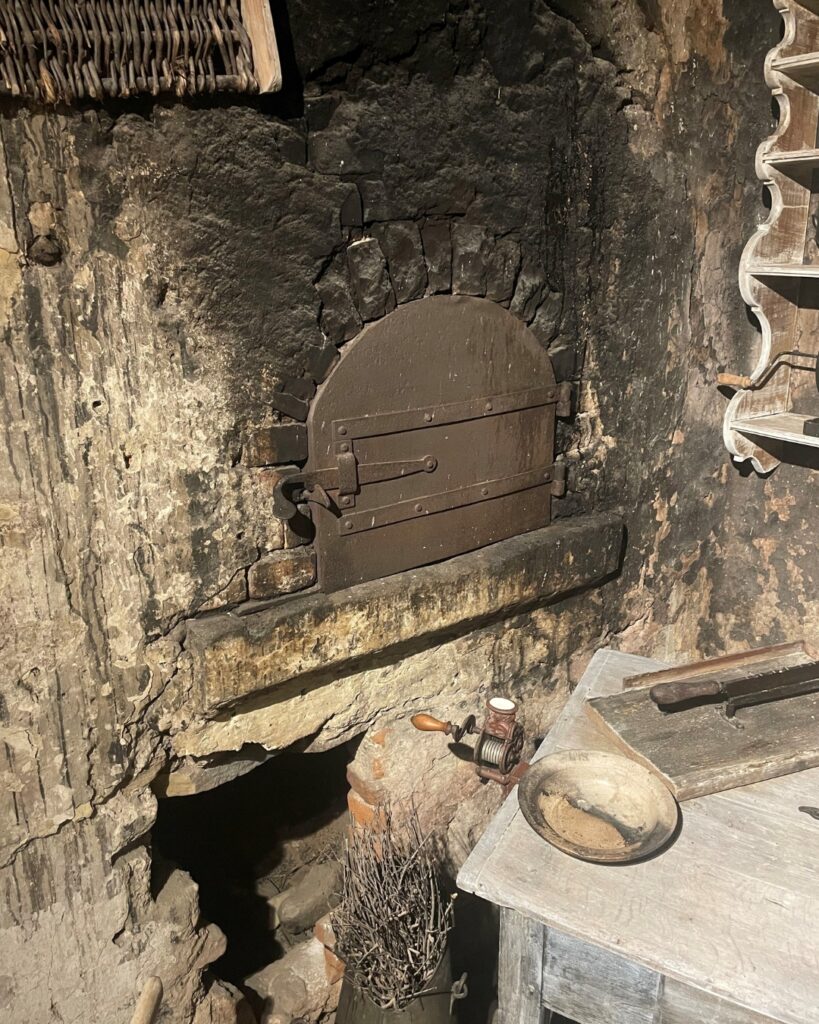
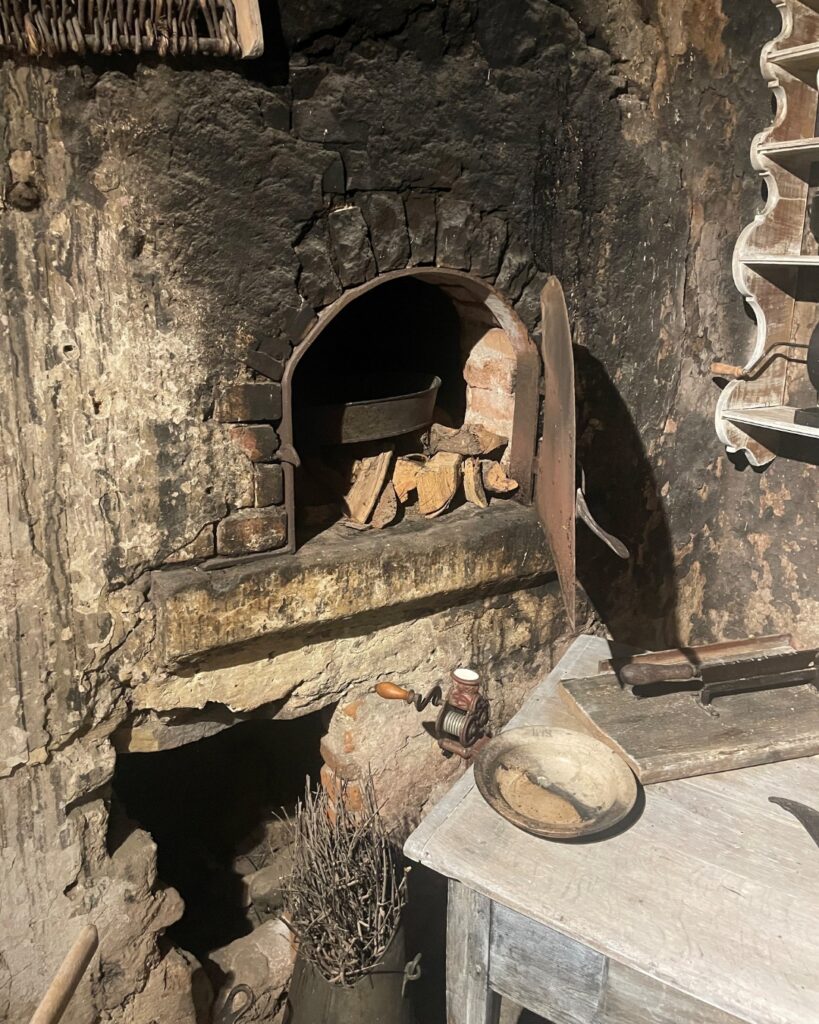
In the 19th century, many families in villages had their own oven and baked their bread. On the day before kneading, the flour was stored in a banneton or a flour box, then mixed with water, salt, and sourdough from the previous baking. This mixture rested in the kneading cavity, a hollow in the kitchen table, until the next day. The dough was then kneaded and divided into several loaves.
Next, the bread oven was fired, the embers were spread with a poker, and the ashes were removed to clean the oven. The ashes were stored in the ash chamber, a hollow space beneath the oven, and later reused, for example as washing product or fertilizer. The dough was placed in the oven using a bread peel. After baking, the bread could be kept for several days.